

Passover Through My Sephardic and Mizrahi Lens
March 15, 2026 | Jewish Traditions and Values, Shabbat and Holidays
By Carmen Thomas, Timonium Parent Community Connector
Growing up in an Indian and Moroccan Jewish household, I didn’t always realize how different our traditions were from those in other American Jewish homes. It wasn’t until I got older that I began to see how unique—and deeply meaningful—our customs really were. Passover, in particular, always highlighted how Jewish traditions evolve across cultures while remaining firmly rooted in ritual, memory, and liberation.
 Dressing With Intention
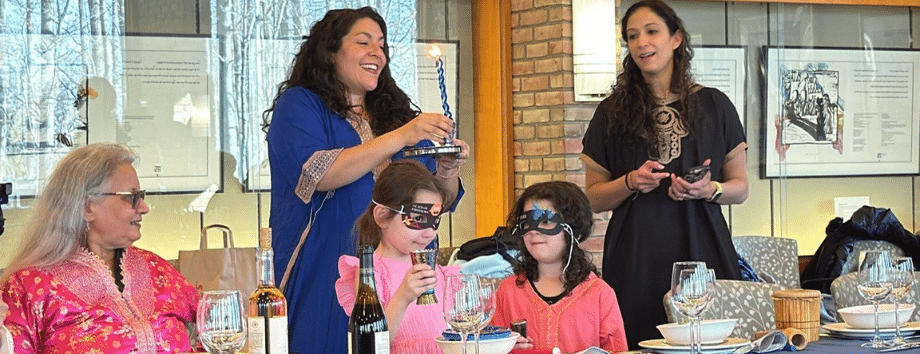
In my family, Passover begins before we even reach the table. We take the time to dress in traditional Moroccan clothing, especially kaftans. My father wears a hooded one called a djellaba. Getting dressed is more than aesthetics, it’s a moment of intention. It visually and spiritually grounds us in our North African roots, reminding us where we come from and what stories we carry into the holiday.
The Food That Tells Our Story
Food is where cultural differences become most visible. Unlike Ashkenazi traditions, Sephardic and Mizrahi Jews eat rice and beans during Passover. These foods are staples throughout Asia, the Middle East and North Africa, and rice was present at nearly every meal growing up.
Our Passover soup also looks very different from the matzo ball soup most people expect. Instead, my family makes a rich beef stew with lima beans, vegetables, and spices that truly burst with flavor. Even our charoset breaks from the norm—no apples here. Ours is date-based, reflecting ingredients native to the Middle Eastern and North African regions. Each dish feels like an edible link to geography, history and resilience.
Rituals During the Seder
Some of the most powerful moments of our seder come from traditions that aren’t widely known. At the beginning of the seder, the leader takes the seder plate and gently circles it around each person’s head while everyone sings “Bibhilu yasanu mi-mitzrayim” (with haste we left Egypt.) It’s a blessing, a way of symbolically bringing everyone into the experience of liberation and ensuring that no one is left behind.
During the recitation of the plagues, we do something different as well. Instead of dripping wine from our glass with a finger, two people stand over an empty bowl—one holding a cup of water, the other a cup of wine. As the entire room recites each plague, a bit of water and wine are poured into the bowl simultaneously. At the end, the remaining water is poured into the wine cup, and the mixture is emptied into the bowl, clearing the last drops of wine.
Music is woven throughout our Haggadah, and the final song, “Chad Gadya,” is sung in both Hebrew and Arabic. Not everyone knows the Arabic verses by heart, some of us rely on cheat sheets, but that blend of languages feels like a perfect reflection of who we are.
Mimouna: Celebration After Passover
When Passover ends, we celebrate with Mimouna—a joyful, vibrant holiday marking the return to chametz. Once again, we dress in Moroccan-style clothing, sometimes adding embellished hip scarves. We dance to Moroccan and Indian music, mixing in familiar favorites to get everyone moving.
And then there’s the Moufleta—the undeniable highlight. Thin sheets of dough are stretched, layered, and cooked on a griddle, then drizzled with honey for sweetness. Some versions lean savory, others play with different toppings, but all of them feel like celebration made tangible.
Passover, in my family, has always been more than a ritual—it’s a lived expression of history, culture, and joy. Each tradition tells a story, and together they remind me that there is no single way to be Jewish—only deeply rooted, beautifully diverse ones.