

Holding Grief and Joy Together: Reflecting on Israel’s National Days
March 20, 2026 | Israel & Global
By Yael, Senior Community Shlicha for The Associated
When I am asked what feels most Israeli to me, the answer is obvious: the transition from Memorial Day to Independence Day. The concept behind marking these emotionally charged days—beginning with Holocaust Remembrance Day and continuing exactly one week later with Israel’s Memorial Day followed immediately by Independence Day celebrations—is that we cannot celebrate our independence and very existence before we remember those who sacrificed their lives so that we could live.
We remember and mourn first, and only then do we celebrate. Joy interwoven with sorrow—that is the State of Israel.
I grew up on a kibbutz, with a grandmother who was a Holocaust survivor. From a young age, I remember attending the community ceremony so I could be there for her. Our family tradition was that after the ceremony, we would walk back home with her for a cup of tea, making sure she was alright. She wasn’t alright. She only looked tough. But every year, as soon as Passover ended and the atmosphere of the national holidays approached, her mood would drop drastically. She was hurting inside. Not even children, grandchildren, and great-grandchildren can fill the void of a girl orphaned from her parents and siblings. The least we could do was simply be present.
One of my strongest memories was in my Bat Mitzvah year, when my youth counselor suggested that I join my grandmother in lighting the six memorial candles at the community ceremony. My grandmother hated being the center of attention, yet somehow, she agreed to participate with me. It remains one of the most powerful moments we ever shared.
Then came Memorial Day. As a child, my mother served on the committee for the ceremony, and I remember watching films with her made to commemorate the kibbutz’s fallen soldiers. Each year, the ceremony focuses on two stories. I knew the stories and the families, but it still felt distant.
But, starting in 2006, the stories became more personal to me. Friends of my brother were killed in Lebanon; A classmate lost her pilot father in a helicopter crash and many more. Every story pierced my heart.
The events began the evening before Memorial Day, exactly at 8 p.m., with the siren. The entire kibbutz gathered around the memorial. Sarah read “David’s Lamentation” from The Bible, Hanan played the trumpet as the flag was lowered to half-mast, and the bereaved families lit candles beside the names of their loved ones. Then we moved to the main ceremony in the dining hall.
The next day we went to school wearing white shirts. Soldiers who graduated from the school came to the ceremony in uniform, and the youth rushed back to the kibbutz to participate in the ceremony at the cemetery. The rest of my day was filled with memorial programs on TV and so much pain.
When I was in the army, I wrote that I wished I could take away even a little of the pain carried by the bereaved families. How do they continue to function under such impossible grief? When I was in the army, Operation Protective Edge took place. And to the names of the heroes of the Israeli wars—new heroes were added, my own age. How on earth can people continue to breathe?
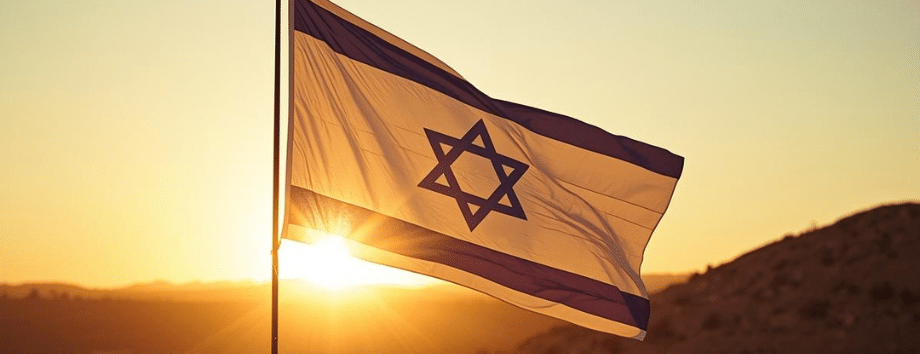
At 8 p.m., we would turn on the TV to watch the torch-lighting ceremony on Mount Herzl, and whoever wanted went to the kibbutz celebration. There were parties and concerts across the country. The next day, Independence Day, the whole family gathered for a barbecue and watched the classic film “Givat Halfon”. And every house in the neighborhood flew the Israeli flag. Independence Day is a day of pride. A day with a special atmosphere. I wonder how I’ll feel this year, being far from home. Will it still feel the same?
On October 7, 2023, our lives changed. Omer, from our kibbutz, was killed in battle near the Gaza border. The heroes were no longer just my age—they were also my own youth movement teens, my gap-year students in the Arava, the younger siblings of my friends, their cousins, their nephews, their children. So many. Too many. Good, principled, beautiful, intelligent people—here and suddenly gone.
There was also a little girl I knew from the kindergarten where I worked as a teen. Fragile and sweet, she grew up to be a young woman who chose combat service, volunteering to defend the nearby base because there weren’t enough armed soldiers, and fell in battle of few against many. I stood at her funeral, crying over her grave—still seeing her as the little girl from the kindergarten.
And the wounded? One of my dearest former students from my youth work is one of the war’s most severe head injury survivors. A stunning, charismatic armored corps officer who is now confined to a wheelchair, unable to speak or move. Fighting daily for any fragment of life. I know his family too, the lioness mother, the devoted father, the incredible siblings. Their lives turned upside down. Are they also not part of the unbearable sacrifice? Their lives will never return to what they were. And neither will the lives of the countless hidden wounded—those struggling with trauma and mental health. So, so many. And the pain has no end.
After October 7th, I didn’t know how I would survive Memorial Day, if even before it was nearly unbearable. I discovered that being active helps me cope. I was with friends and family members who share the same grief, and it gave me strength. And now, even while far from home, I will have the honor of commemorating the people who mean so much to me and telling their stories. And I know I will not feel alone—because the Baltimore community is my home too. My family, and Israel’s family.
And after we cry together, we will go out to celebrate together—because we truly have no other choice. Because we have no other land. Because “in their death they commanded us to live” is not a cliché—it is our reality. The loss is already too vast, too painful, for us not to continue nurturing our country, living our lives in it, and loving it unconditionally.
We are such small people among the nations—and yet we have a country of our own. What a miracle. And we cling to it and will never let go.
And we will continue: to live, to rejoice, to work hard, and to hope for better days.